What age do cats stop growing?


Enter a keyword below to search for articles and products.
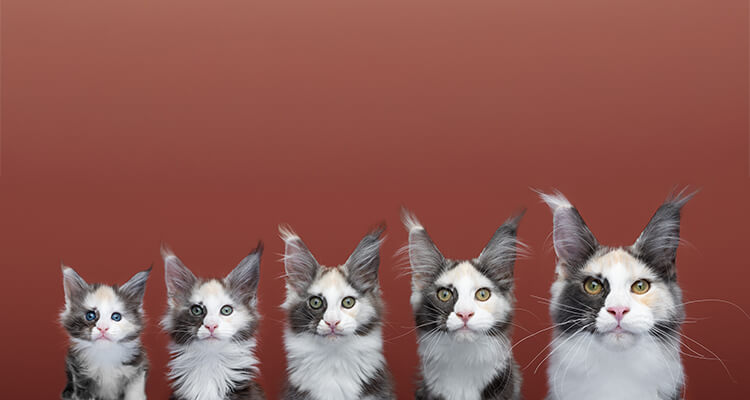

Most cats stop growing at around 12–18 months of age, though larger breeds, like Maine Coons, can continue developing for up to 3–5 years. A cat’s growth depends largely on its breed characteristics.
Looking after a kitten is a special time for any pet owner, as they enrich our lives with mischief and love. Kittens have unique dietary needs and care requirements, and once a cat reaches adulthood, you will need to adjust their diet and routine.
Generally, most cats will reach their full size early in their lifespan, at around 12–18 months of age. However, this can vary significantly based on breed, genetics, diet, and health. In this article, we will explore everything you need to know about the life stages of cats, including when common cat breeds become fully grown, so you can be readily prepared for these life stage changes. Need some help determining how old your kitten or cat is? Check out our calculating cat years blog for more advice.
There are many unique cat breeds, and they all mature at their own pace; however, each breed has average growth durations as detailed below.
Maine Coon cats stop growing at 3–5 years; however, individual growth can still vary.
Norwegian Forest cats are not too dissimilar and take about 2-4 years.
Ragdoll cats stop growing after 2–3 years.
Siamese cats stop growing far earlier, after just 12–18 months. British Shorthair cats are the same.
Persian cats take 18–24 months to reach a fully grown state.
Though the time frames for each breed differ, every cat on this list may still vary in size and individual growth.
Kittens experience an incredibly rapid period of growth and development during their first few weeks of life. Kittens are born with their eyes and ears closed. They cannot walk yet, so they crawl on their tummies and rely on their developing sense of smell to find and feed from mum.
Age | Growth Milestones |
2 weeks of age | By two weeks of age, your kitten’s eyes will have opened and they will be blue. This colour will begin to change as they get older. |
3 weeks of age | By 3 weeks of age, the kitten’s ear canal has fully opened. |
4 weeks of age | Before 4 weeks of age, kittens rely on their mother to stimulate them to excrete their waste. By 4 weeks of age, the kitten can now eliminate urine and faeces on their own, once this happens, it is time to start litter training!
Their needle sharp deciduous (milk teeth / baby teeth) are also starting to erupt through the gums.
Kittens are also starting to explore their surroundings a little wider away from mum and interact properly with their littermates.
Kittens will also start showing an interest in mum’s food and can now be weaned onto kitten food. |
8–12 weeks of age | Between 8–12 weeks of age, the kittens are old enough to have their vaccinations and can leave mum to go to their new home from 12 weeks of age. |
4 months | At 4 months old, the deciduous teeth start to fall out, and they are replaced by adult teeth. The kitten will have a full set of adult teeth by about 7 months old. |
5 - 6 months | At 5–6 months, the kitten is old enough to be spayed or neutered. |
6 months of age | Kittens can start to look like adult cats by 6 months of age; However, they need nutritional support for optimum health and development during their entire growth phase, which lasts 12 months. We recommend that a kitten is fed specially tailored complete and balanced kitten food until they are 12 months of age, this is when they are considered an adult and can be fed adult cat food. |
When do kittens become adult cats? There are a multitude of different factors that impact how fast a cat will grow; for example, kittens need to be fed complete and balanced kitten food which contains nutrients in the right amounts and ratios to support healthy growth and development. Inadequate nutrition can impact them significantly at this stage. Most cats will reach their full size at around 12-18 months of age. However, this can vary based on breed, genetics, diet, and health.
Neutering your cat or kitten may impact their body shape. Neutering a cat before they reach full maturity may result in slightly longer bones and a leaner physique overall. This is why knowing exactly when kittens become cats based on their breed is important. However, when neutered, cats are more likely to gain weight, so it’s important to monitor food intake and bodyweight accordingly. It’s important to remember if you have no intention of breeding your cat, you should have it neutered at the age your vet recommends.
A complete and well-balanced diet tailored to meet the nutritional requirements of a kitten is the key to maintaining healthy growth in kittens, no matter how old your kitten is. Kittens require more protein and calories than adult cats to support their rapid growth. Improper nutrition can lead to stunted growth or health issues, so knowing how often to feed your kitten is vital.
Male cats typically stop growing between 12-18 months, with larger breeds growing up to 5 years; genetics, nutrition, and neutering influence their growth timeline. Males are also known to be longer than females and tend to develop distinct features like broader heads or thicker necks.
It’s a good idea to measure your cat to ensure they are growing at a steady pace, we suggest you do this once a month during their first year and record the measurements. You should always consult your veterinarian if their growth seems irregular or if the cat’s size deviates significantly from breed/age expectations.
Height: Measure from the floor to the base of their neck while your cat is on all fours.
Weight: You can use pet scales or bathroom scales to weigh your cat, using treats might help keep them still.
Body Length: We advise using string or a tape measure, starting from the cat's head and measuring to the base of the tail, following the spine.
A kitten’s age correlates with their weight. Kittens tend to experience typical weight gain patterns in the first 6 months; however, growth can vary significantly based on many of the factors already discussed. As a benchmark, we can assume that a kitten will gain around 100 grams weekly. The average weight of a kitten at 9 weeks will therefore be about 900 grams.
2 weeks: 300g
4 weeks: 500g
8 weeks: 900g
12 weeks: 1700g
6 months: 4000g
Most cats will reach full size at around 12–18 months of age. However, this can vary significantly based on breed, genetics, diet, and health. For example, Maine Coon cats become fully grown at 3–5 years of age.
The size of each cat when fully grown depends on multiple factors, namely breed and individual growth.
Maine Coon cats, which are one of the largest of cat breeds, for example, can weigh 5–10kg when fully grown, while a fully grown domestic cat normally weighs between 3.5–5kg.
The size of your cat is largely dependent on the characteristics of the breed.
Neutering a cat before they reach full maturity may result in slightly longer bones and a leaner physique overall; this is why knowing exactly when kittens become cats based on their breed is important. However, when neutered, cats are more likely to gain weight, so a complete and well-balanced diet and exercise routine, as well as monitoring food intake and bodyweight, are important.
Kittens experience the fastest rate of growth during the first 6 months of their lives, after this stage, growth will slow down and eventually stop once they reach maturity. Most cats will reach their full size at around 12–18 months of age; however, this can vary significantly based on breed, genetics, diet, and health.
Kittens tend to experience typical weight gain patterns in the first 6 months. However, growth can vary significantly based on many of the factors already discussed. As a benchmark, you can assume that a kitten will gain around 100 grams weekly. The average weight of a kitten at 9 weeks will therefore be about 900 grams. You should arrange a visit to your local vet to give the kitten a check-up, and they can also estimate how old your kitten is.
Subscribe to our newsletter to receive a welcome discount, useful tips and exciting news about our products.
Discount code valid until 31.12.2026 on a purchase of WHISKAS® products on www.zooplus.co.uk. Zooplus minimum order £10, code cannot be used in conjunction with other offers or discounts. Code valid for one time use.


Click to buy from any of the retailers below