

Bengal cat overview
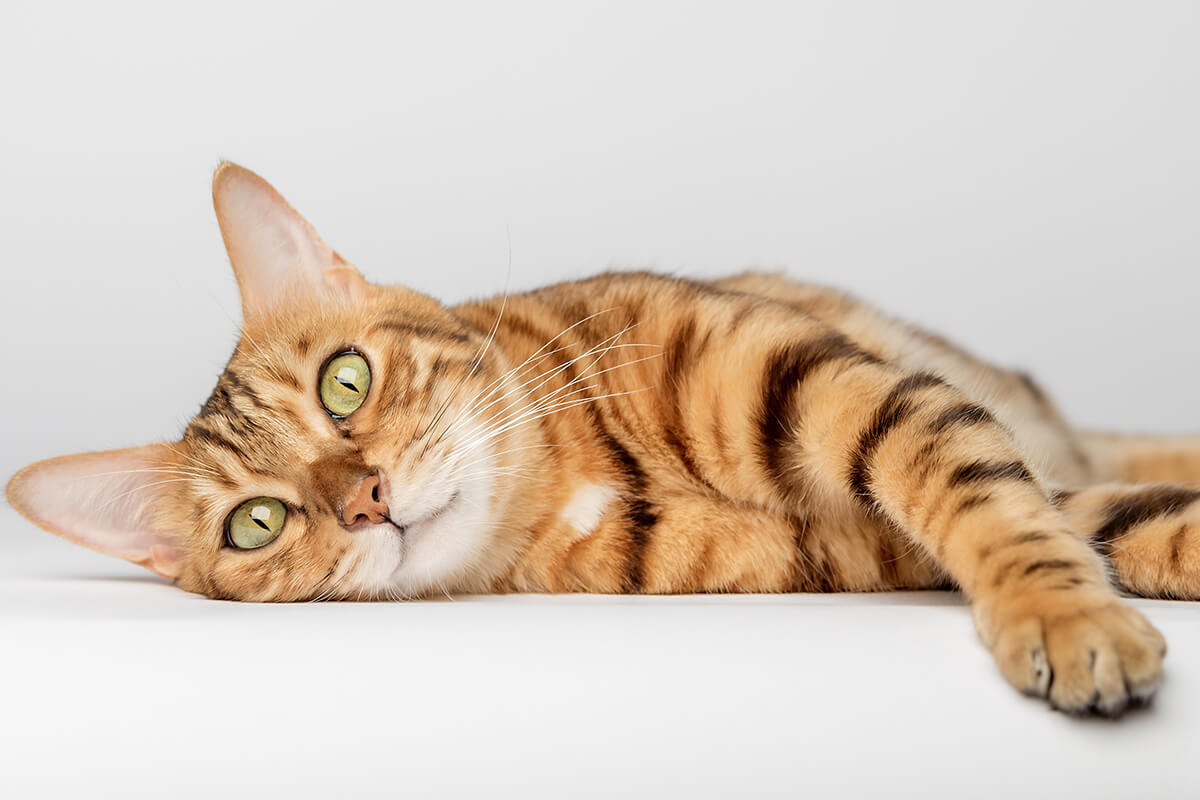
Often described as “The Leopard of the Living Room,” the Bengal cat is admired for its striking wild appearance combined with an affectionate nature. With their beautifully patterned coats and athletic build, it’s easy to see why the Bengal continues to grow in popularity among active households.
While many prospective owners are drawn to their exotic look, it’s important to set expectations. The Bengal cat personality is loving and loyal, but they are not typical lap cats. Rather than sitting on you for long periods, they prefer to be near you, playing, exploring or interacting. They thrive on engagement and activity.
These cats are known and admired for their dense, short coats which have beautiful spotted or marbled patterns. Due to their short coat, they require less grooming than long haired breeds, however regular brushing still helps maintain coat health. The average Bengal cat size is medium to large, with muscular and agile bodies. The average lifespan of Bengals is approximately 12-15 years, although many live longer with appropriate nutrition, enrichment and routine veterinary care.
Breed history and origin
The Bengal is a relatively modern, hybrid breed created in the United States by Jean Mill in the 1990s. The goal was to create a domestic cat with the dramatic markings of the Asian Leopard Cat, while maintaining a fully domestic temperament.
Early breeding involved crossing the Asian Leopard Cat with domestic breeds such as:
When researching the Bengal, you may see the term “F-generations.” This refers to how many generations the cat is removed from its wild ancestor, the Asian Leopard Cat. Most family pets today are F4 (fourth generation or later, meaning they keep the wild look but have a fully domestic temperament).
In the UK, licensing requirements were lifted in 2007, and these domesticated Bengals are fully legal to own without a licence.
Key characteristics of the Bengal cat breed
Bengal cat characteristics combine exotic appearance, marked by their leopard-like spots or rosettes, as well as their playful and outgoing personalities. This is an active, athletic breed that requires mental stimulation and daily play.
Bengal cat size is medium to large with muscular bodies and strong hind legs designed for jumping, climbing and sprinting. Their energy levels are significantly higher than many other domestic breeds, making them best suited to active owners who can provide interactive play and stimulation.
A defining trait of the Bengal cat personality is often described as “dog-like.” Many owners report that their Bengal will follow them from room to room, greet them at the door and even learn to play fetch. Bengals are highly intelligent and curious. Without enough stimulation, they may learn to open cupboards or doors simply to entertain themselves. Although affectionate, they typically show love through engagement and proximity rather than prolonged lap time.
Physical characteristics of the Bengal cat breed
The Bengal is athletic, agile and built for movement. They have slightly longer back legs, a lean yet muscular frame and a thick tail carried low. The average Bengal cat size is a weight of 5.4kg for females, with males reaching an average 6.8kg. Although their muscular build can make them appear larger than the scale suggests.
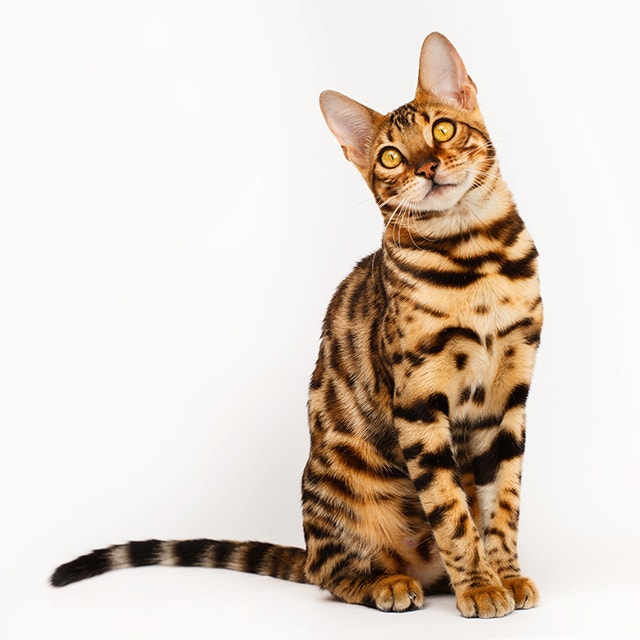
Their coat is one of the most distinctive Bengal cat characteristics. Patterns fall into two primary categories:
- Spotted: featuring bold spots or rosettes across the body.
- Marbled: flowing, horizontal swirls resembling marble stone patterns.
Rosettes are particularly prized. These are open, two-tone spots similar to those seen on jaguars, and kittens with well-defined rosettes often command higher prices. Some Bengals also carry the “glitter” gene. This gives the coat a dusting of gold or pearl-like shimmer, making it appear to sparkle in natural light. The coat itself is short, dense and soft, lying close to the body.
Bengal cat’s grooming and hygiene needs
The Bengal has a short, dense coat, meaning grooming needs are lower than their longer-haired counterparts. They also shed less, although regular brushing still helps maintain skin and coat health. Maintaining good grooming habits early, particularly with a Bengal kitten, helps establish a calm routine for adulthood.
We suggest the following at-home grooming routine for Bengals:
- Coats: groom your cat every 1-2 weeks using a good quality slicker brush to remove loose hair and keep their coats smooth and glossy. Focus your attention on the head of your cat first and work towards the tail, make sure to brush your cat's legs and belly too. Because of their fine coat, Bengals rarely need to be bathed.
- Eyes: clean their eyes with a soft wet cloth or cotton wool pad to remove any build-up of eye discharge.
- Nails: if your Bengal is an indoor cat, trim their nails to keep them healthy. Do this at home using cat nail clippers or visit your local groomer.
- Special trait: one unique Bengal cat characteristic is their strong affinity for water and they will seek it out if they are outdoor pets. Unlike most breeds, many Bengals enjoy playing with running taps, splashing in water bowls, and some may even attempt to join their owners in the shower. This playful interest in water is completely normal for the breed.
Bengal cat’s behaviour and training needs
The Bengal cat personality is often described as “dog-like”, intelligent, curious and full of energy. While this makes them highly trainable, it also means early guidance is important, preferably as kittens.
Litter training a Bengal kitten is the first step to ensuring your pet settles into their new home smoothly.
Gently place your kitten in the litter tray after meals or naps. Soon your Bengal will quickly learn the routine and will pick up these cues. Positive reinforcement works best. Reward good behaviour with praise or treats, and redirect unwanted behaviours.
Thanks to their intelligence, many Bengals can learn tricks such as sitting, responding to their name, or even playing fetch. Clicker training can also be effective.
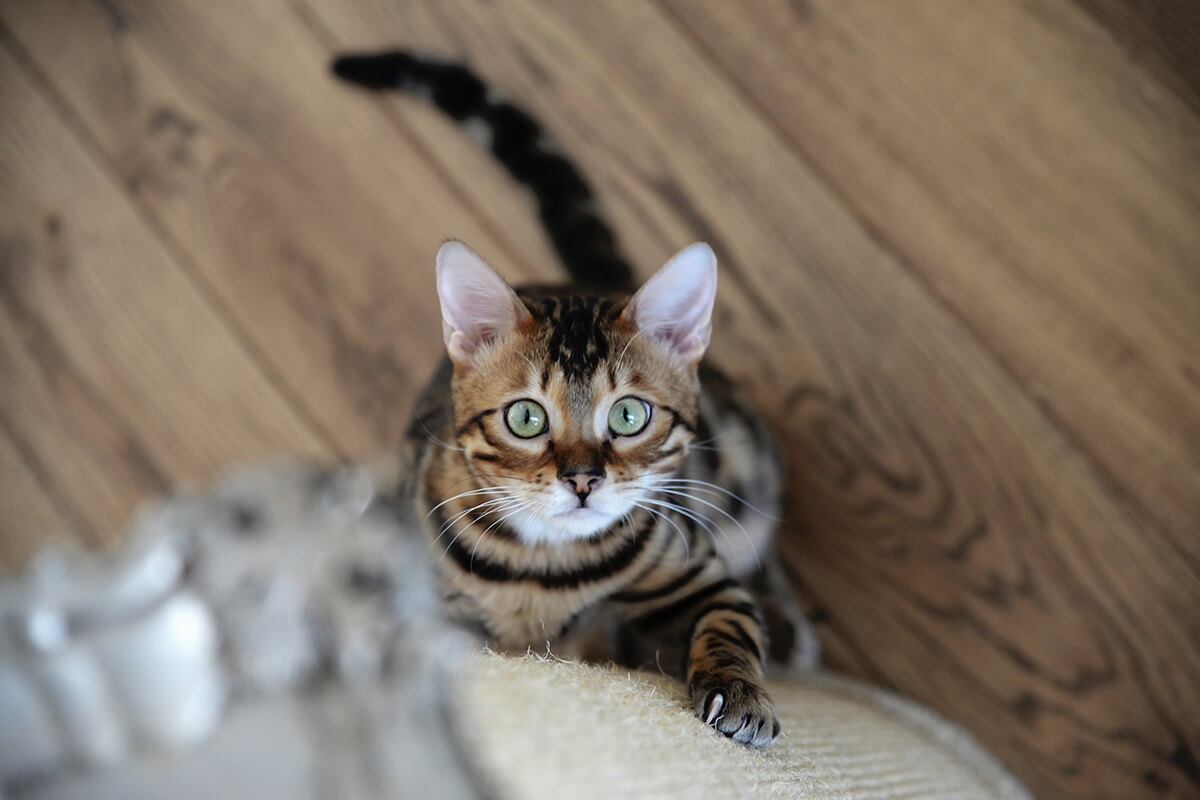
However, it’s important to understand that a bored Bengal can become restless. Early socialisation is always important to improve your cat’s overall behaviour. Because of their high energy levels, insufficient stimulation may lead to scratching furniture, opening cupboards or excessive meowing.
These behaviours can be resolved by:
- Giving your cat access to sturdy scratching posts
- Rotate interactive toys
- Use puzzle feeders to challenge their minds
- Consider exercise cat wheels to help them burn excess energy
Socialising and playing with your pet every day with their favourite toys and treats.
Mental and physical engagement for Bengal cats
Mental stimulation is vital for both the Bengal kitten and adult cat. Puzzle toys filled with WHISKAS® Cat Treats, interactive feeders and problem solving games can help channel their intelligence into positive activity.
Bengals have a strong instinct to climb and observe from above, making “vertical territory”, such as tall cat trees, shelves and wall-mounted climbing systems, particularly important for this breed. High vantage points allow them to feel secure while satisfying their natural athleticism and burning off energy. Known for their boundless energy, the Bengal cat personality is highly active, meaning they often require more structured play and interaction than many other breeds. Alongside daily play and outdoor access, providing elevated spaces helps them observe their surroundings, stay stimulated and feel secure.
Due to their high prey drive and confidence outdoors, free-roaming can carry risks, including potential injury, theft or impact on local wildlife. A secure “catio” (enclosed patio space) offers a safer compromise, so your cat can enjoy fresh air and stimulation in a protected environment.
Bengal cat’s nutritional requirements
Supporting the health and energy levels of your cat starts with a balanced, high-quality diet. Due to the athletic build and active Bengal cat personality, they benefit from food rich in high-quality animal protein, moderate healthy fats and lower carbohydrates.
Some Bengals can be sensitive to foods high in grains or gluten. If your pet shows digestive discomfort, a grain-free option may be appropriate following veterinary advice.
Hydration is equally important. Many Bengals are drawn to running water, so providing both a water bowl and a fountain can encourage healthy fluid intake. Wet food, such as WHISKAS® Cat Food also supports hydration naturally.
Life stage breakdown:
- Bengal kitten: rapid growth and muscle development require ultra-high-quality protein and calorie-dense nutrition to support their active development.
- Adult Bengal cat: a diet containing Omega-3 and Omega-6 fatty acids helps maintain skin health and supports the glossy coat, enhancing shine, particularly important for cats with the “glitter” trait.
- Senior Bengal cat: as metabolism slows, monitor weight carefully. Adjust portion sizes to prevent unwanted weight loss or gain while maintaining lean muscle mass.
Matching nutrition to life stage helps maintain healthy Bengal cat size, energy levels and coat condition.
Are Bengals suitable for families?
Bengals can make excellent family pets due to their inquisitive and affectionate nature. Their intelligent and interactive Bengal cat personality means they often bond strongly with family members and enjoy active engagement.
They typically get along well with children, dogs and other confident cats when properly socialised from a young age. However, their high energy levels and strong prey drive mean they are not suited to every home.
They are an adaptable breed that enjoy both indoors and outdoors. Supervised outdoor play is recommended and indoor cats will need more mental and physical stimulation due to their energetic nature.
Tips and tricks for socialising your Bengal include:
- Spending quality time with your pet
- Let your Bengal seek your attention first
- Gentle introductions to new family members, pets or environments
- Lots of positive reinforcement.
Not sure if a Bengal cat is a right fit for you and your home? Refer to this suitability checklist:
A Bengal cat may suit you if:
- You want a dog-like cat that follows you from room to room
- You enjoy interactive play and can commit to daily stimulation
You want a highly intelligent, engaging companion - You understand that their activity levels exceed many breeds of similar Bengal cat size.
A Bengal cat may not suit you if:
- You are looking for a quiet lap cat
- You work long hours away from home
- You prefer a low-maintenance, sedentary pet
- You keep small animals such as birds, hamsters or reptiles (due to their strong prey drive).
Finding a responsible breeder for Bengal cats
Choosing a responsible breeder is essential when purchasing a Bengal kitten. Ethical breeding practices support long-term health, temperament and proper socialisation. Look for breeders registered with recognised organisations such as GCCF (Governing Council of the Cat Fancy) or TICA (The International Cat Association). Registration helps ensure breed standards and responsible practices are followed.
Responsible breeders will:
- Keep kittens until at least 12 weeks of age to allow proper social development
- Provide documentation of vaccinations and genetic testing
- Allow you to meet the kitten’s mother (and sometimes father)
Offer guidance on care, kitten food and nutrition.
Buying a registered Bengal cat reduces the risk of accidentally purchasing an early-generation hybrid that may have a more challenging temperament.
Genetic health consideration
Like all breeds, the Bengal has certain inherited health risks. Genetic screening helps reduce the likelihood of these conditions.
Common concerns include:
- Hypertrophic Cardiomyopathy (HCM): A heart condition that can cause lethargy, breathing difficulties or sudden collapse. Regular cardiac screening is recommended.
- Progressive Retinal Atrophy (PRA-b): A genetic eye condition that can lead to vision loss. DNA testing is available.
- Pyruvate Kinase Deficiency (PK Def): A form of inherited anaemia that may cause weakness or pale gums.
- Patellar Luxation: Dislocation of the kneecap, which may result in limping or intermittent hind-leg skipping.
Reputable breeders will provide proof of genetic testing for breeding cats.
Bengal Cat: FAQ
How much is a Bengal cat in the UK?
In the UK, a pet-quality Bengal cat typically costs between £500 and £2,000+. Show-quality kittens or those with rare coat colours such as Snow or Silver can exceed £2,500. Price is influenced by factors including GCCF or TICA registration, pedigree lineage and coat pattern. Well-defined rosetted markings (two-tone spots) and the “glitter” coat trait often command higher prices. Always choose a registered breeder to ensure ethical standards and appropriate health screening.
Are Bengal cats good pets?
Yes, for active families. The Bengal cat personality is often described as dog-like, they frequently follow owners from room to room, can learn to play fetch and thrive on interaction. However, they are high-energy and can be demanding. Bengals are affectionate but not typical lap cats. Rather than sitting still for long periods, they prefer active play and engagement. Owners should be prepared to meet their physical and mental needs daily.
Can a Bengal cat be a house cat?
Yes, a Bengal cat can live happily indoors, and doing so protects them from traffic, theft and other outdoor dangers, while also reducing the impact of their strong prey drive on local wildlife. However, a Bengal cat characteristic is their need of “Vertical Territory,” including tall cat trees and climbing shelves. A secure catio offers safe outdoor access without the risks of free-roaming.
Are Bengal cats legal in the UK?
Yes, Bengal cats are legal in the UK. Early-generation hybrids (F1–F3) were previously subject to licensing, but since 2007, F4 generations and onwards are considered fully domestic pets and can be owned without a licence. Most Bengal kittens available from reputable breeders are F4 or later. Always choose a GCCF or TICA-registered breeder to ensure ethical practices and proper socialisation.