Is my cat happy? Signs to look for


Enter a keyword below to search for articles and products.

In cats, happiness can be shown through purring, relaxed body language, and play. As a concerned cat parent, you may have asked yourself, ‘Is my cat happy? ’ While each cat is an individual, they may show happiness in different ways.
Just like us, our feline friends express how they feel through body language as well as vocalisations and use many different parts of their bodies to show us how they're feeling. Signs your cat is happy can come in many forms and are not limited to just purring, though may vary from cat to cat.
Cats can be very vocal, especially when they’re happy. Vocal cats may have long conversations with you, and the pitch of their meow will allude to how they are feeling.
A high-pitched meow is a content cat, while a low-pitched meow may indicate an unhappy or annoyed cat. That ''prrrrupttt!'' sound many cats make, is also a good indication of a happy cat.
While purring is not always a sure-fire sign of a cheerful cat, for the most part, it can be an indication of feline contentment or even bliss.
If cats feel good, they will keep themselves well groomed. A cheerful kitty will also groom other cats or even bite and lick their owner – this also shows trust and a positive relationship.
A sudden drop in grooming, matted fur, or changes in your cat’s skin and coat can be a sign of stress or illness. It’s worth bringing this to a vet to check.
To show their contentment, cats will very often knead their paws on either soft material or their human’s body. This sign of happiness is also affectionately referred to as ‘making biscuits’ and is rooted in the cat’s nursing instincts from birth.
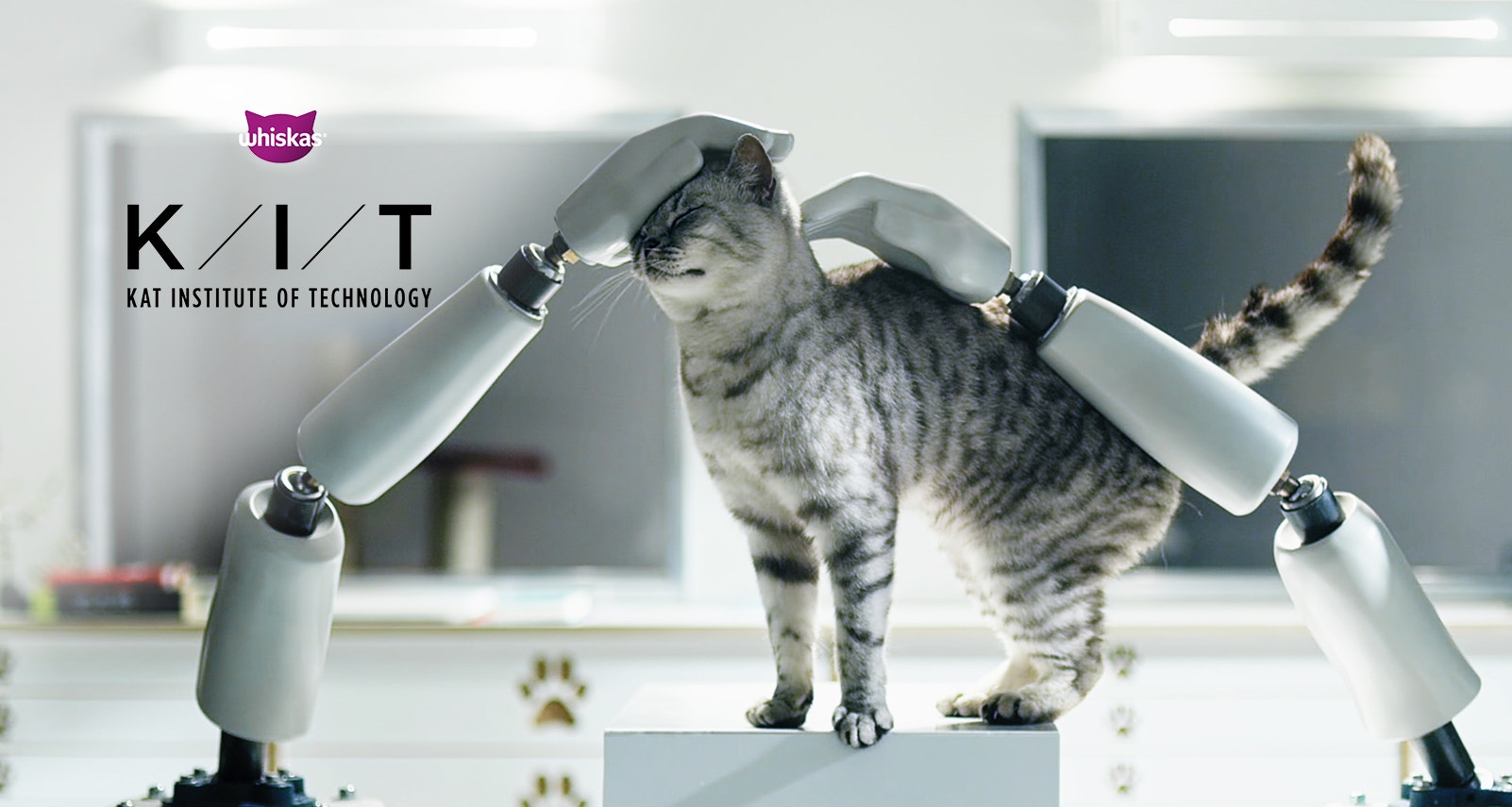
Head-butting is also an indication that your cat is happy, as it is a scent-marking trust signal. Another trust signal cats display is a slow blink, also known as a ‘cat kiss’.
You may not always understand your cat’s behaviour, though you should know that all of these behaviours are your cat’s way of displaying their affection for you.
If your cat is sleeping with their paws tucked under, they are feeling relaxed and at-home. An agitated cat will straighten its legs and erect the hair along the spine, while a cat in a good mood will shrink to appear small and unthreatening.
A joyful cat’s tail will stand straight up, with just the tip crooked to greet people and other pets that the cat considers friends.
Your cat’s eyes are very expressive. Sudden dilation of the eyes indicates they are extremely happy.
A cat is also in a happy-place when their ears are facing forward, but tilted back just slightly.
While cats may sleep more when depressed, their sleep locations can be an indication of happiness. If your cat sleeps with other cats or chooses you as a bed-buddy – this indicates happy relationships.
Play is a great indication of happiness, and your cat will play with other pets and humans that they like or trust.
From exuberant sprints and cat wrestling matches to calm paw patting of the features, these playful activities indicate a happy cat.
A healthy appetite is a terrific sign of a happy cat. Your kitty may ask you for food by rubbing around your legs and meowing, leading you to their bowl.
Cats are smart and will soon have their owners fully trained to provide them with the right amount of treats when required, but this behaviour is a sign of trust and shows that your feline friend is happy.
Having a happy cat curled up on your lap purring gently is something all cat parents hope for. By looking out for certain behaviour traits in your feline resident, you will be able to ensure that your cat is happy and content.
Just as cats show signs when they’re happy, there are certain behaviours they’ll exhibit to tell you they’re unhappy, too.
These symptoms can often point to stress or, in some cases, depression and anxiety in cats. As a result, it’s important to understand your cat’s behaviour and to know when they may be exhibiting signs of depression or anxiety that warrant a veterinary visit.
Now you know what to look out for, here are some top ways to keep your cat happy:
Employing all of these in your home, and making an effort to better understand your cat, will go a long way in keeping them happy.
No, cats are often far more subtle in showing their affection. Where dogs may lick or jump or roll on their human to show affection, a cat simply being in the same space is a sign of trust and love. Common signs of affection in cats are kneading, head-butting, and vocalisations.
No, cats do not smile like humans do, and instead show their happiness through relaxed body language, vocalisations, kneading, and head-butting behaviours.
This is a sign that your cat has bonded with you and views you as a source of safety, food, warmth, and friendship.
The 3-3-3 rule states that an adopted cat takes 3 days to decompress, 3 weeks to learn your routine, and 3 months to fully bond and feel secure in their new home.
*Based on PRS In-Vivo study (2024) on quality and enjoyment perceptions of 200 cat owners (UK)

Subscribe to our newsletter to receive a welcome discount, useful tips and exciting news about our products.
Discount code valid until 31.12.2026 on a purchase of WHISKAS® products on www.zooplus.co.uk. Zooplus minimum order £10, code cannot be used in conjunction with other offers or discounts. Code valid for one time use.


Click to buy from any of the retailers below